英
11 月 8 日 · 11 分钟

公号【璐璐的英文小酒馆】或者添加【luluxjg2】咨询课程or加入社群,查看文稿和其他精彩内容哦~
Hi, everyone. And welcome back to the fun segment called It Means What?
Hi, 安澜.
Hi, Lulu, hi, everyone.
欢迎大家回来【词源考古研究所】, so 安澜, which particular phrase or word or idiom that we're gonna talk about today?
You know the expression robbery?
就是抢劫.
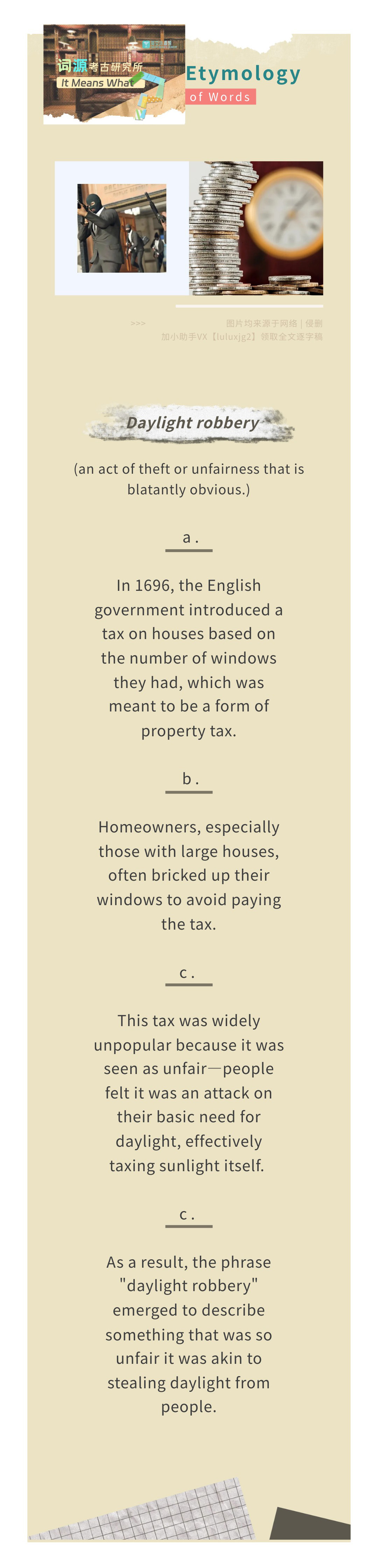
Have you ever heard of “daylight robbery”?
抢劫不应该是夜黑风高吗?
Daylight robbery. I've heard you're robbing me in broad daylight, 光天化日下抢劫我.
I'm assuming it's not real robbery. It's more like what you're doing, it's almost like you're just blatantly robbing me blind.
Yes.
你做的事情就好像在光天化日之下抢劫我一样明目张胆.
Well, exactly. Daylight robbery means it's theft or it's something very unfair, that is really obvious.
For example, if you are ripped off, by like a seller, 如果你来买什么东西被宰了, 或者比如说打车, 然后被绕远路了, 你都可以说this is daylight robbery.
Or if you go into a restaurant and you see a dish that is really, really expensive and for
no reason, you would say that's daylight robbery.
I see the context, in Chinese we probably say something similar, it’s like这不是明抢吗?
Yeah, like daylight robbery. So is there an actual origin story because it sounds pretty obvious already you're robbing me in broad daylight.
Actually, there is a story linked to it and it comes from the 17th century.
In 1696, the English government introduced a tax on houses based on the number of windows they had. This was a type of property tax.
Ok, 所以这个房产税是按照你有多少个window, 你有多少个窗户. So they assumed the more windows, obviously the bigger the house was.
Exactly. So homeowners, especially those with large houses, often bricked up their windows to avoid paying the tax.
Brick up means they use brick to just block the windows. Yeah. I think I've seen this in London somewhere some of the old houses.
Yes, some of the houses from that era, they do actually have bricked up windows which they just never got round to unbroken.
But people need light though.
Well. They normally bricked up the servant’s quarters, not their own bedrooms or their own rooms. I see.
Now this tax was, you can imagine, was really, really unpopular because it was seen as unfair. People felt that it was saying they don't need daylight. They were effectively taxing sunlight.
所以就是日光税, 我好像还看到过这样的一个翻译.
11 月 8 日 · 11 分钟

11 月 5 日 · 10 分钟

一人一条省钱脑洞,那些走红的办法是妙招还是抠门?(纯过日子人-下)
11 月 4 日 · 12 分钟

欧亨利经典黑色幽默!亡命徒绑架熊孩子:人质乐在其中,绑匪步步绝望..
11 月 3 日 · 13 分钟

英文小酒馆 LHH · 2024 年 9 月 3 日 · 8 分钟
公号【璐璐的英文小酒馆】或者添加【luluxjg2】咨询课程or加入社群,查看文稿和其他精彩内容哦~
Hi, everyone. And welcome back to the fun segment called It Means What?
Hi, 安澜.
Hi, Lulu, hi, everyone.
欢迎大家回来【词源考古研究所】, so 安澜, which particular phrase or word or idiom that we're gonna talk about today?
You know the expression robbery?
就是抢劫.
Have you ever heard of “daylight robbery”?
抢劫不应该是夜黑风高吗?
Daylight robbery. I've heard you're robbing me in broad daylight, 光天化日下抢劫我.
I'm assuming it's not real robbery. It's more like what you're doing, it's almost like you're just blatantly robbing me blind.
Yes.
你做的事情就好像在光天化日之下抢劫我一样明目张胆.
Well, exactly. Daylight robbery means it's theft or it's something very unfair, that is really obvious.
For example, if you are ripped off, by like a seller, 如果你来买什么东西被宰了, 或者比如说打车, 然后被绕远路了, 你都可以说this is daylight robbery.
Or if you go into a restaurant and you see a dish that is really, really expensive and for
no reason, you would say that's daylight robbery.
I see the context, in Chinese we probably say something similar, it’s like这不是明抢吗?
Yeah, like daylight robbery. So is there an actual origin story because it sounds pretty obvious already you're robbing me in broad daylight.
Actually, there is a story linked to it and it comes from the 17th century.
In 1696, the English government introduced a tax on houses based on the number of windows they had. This was a type of property tax.
Ok, 所以这个房产税是按照你有多少个window, 你有多少个窗户. So they assumed the more windows, obviously the bigger the house was.
Exactly. So homeowners, especially those with large houses, often bricked up their windows to avoid paying the tax.
Brick up means they use brick to just block the windows. Yeah. I think I've seen this in London somewhere some of the old houses.
Yes, some of the houses from that era, they do actually have bricked up windows which they just never got round to unbroken.
But people need light though.
Well. They normally bricked up the servant’s quarters, not their own bedrooms or their own rooms. I see.
Now this tax was, you can imagine, was really, really unpopular because it was seen as unfair. People felt that it was saying they don't need daylight. They were effectively taxing sunlight.
所以就是日光税, 我好像还看到过这样的一个翻译.

http://rss.lizhi.fm/rss/126917805.xml复制内容版权归创作者,声湃按创作者开放的 RSS 收录。了解收录与 RSS →


